Why Hemp Is A Superior Fibre
When I was scouring the beaches of Vietnam with my 30p onion-and-garlic-container-turned-sifter, I knew I’d found something special in those shells. But once I’d cleaned them up, I was faced with a bit of a dilemma: what on earth do I hang them on to make it into a necklace?
It couldn’t be plastic (obviously, given I was currently bagging up plastic rubbish off the beach and do not want any more plastic ending up back in our ocean!). It couldn’t be something flimsy that would rot after two dips in the ocean. It had to be as tough, natural, and worthy as the shells themselves.
Then I came across Hemp.
Here’s the lowdown on why this plant is perfect for seashell.boutique, and why my inner biology nerd is totally obsessed with it.
A short history of a very long-lived plant
I’ve always been a bit of a geek for how things work, and hemp’s history is honestly staggering. Humans have been growing it for about 10,000 years. To put that into perspective, hemp is older than written language, older than most cities of the world, and twice as old as the great pyramids.
For most of history, hemp was the everything material. It made the sails for Columbus, the rigging for the Roman navy, and even the paper for the first bibles. Hemp was so vital to the UK that there are claims the county of Hampshire was once known as Hempshire. Whether that’s a bit of folklore or not, the sheer volume of hemp grown there for the British Navy was undeniable!
The reason everyone used it back then was because it was so hardy and practical. It’s incredibly strong, it doesn't mind salt air, and it resists rot. It only really fell off because of Western governments getting it confused with cannabis. Same family of plant, yes, but definitely not the same properties. Hemp might be able to suspend you high up, but it won’t make you high.
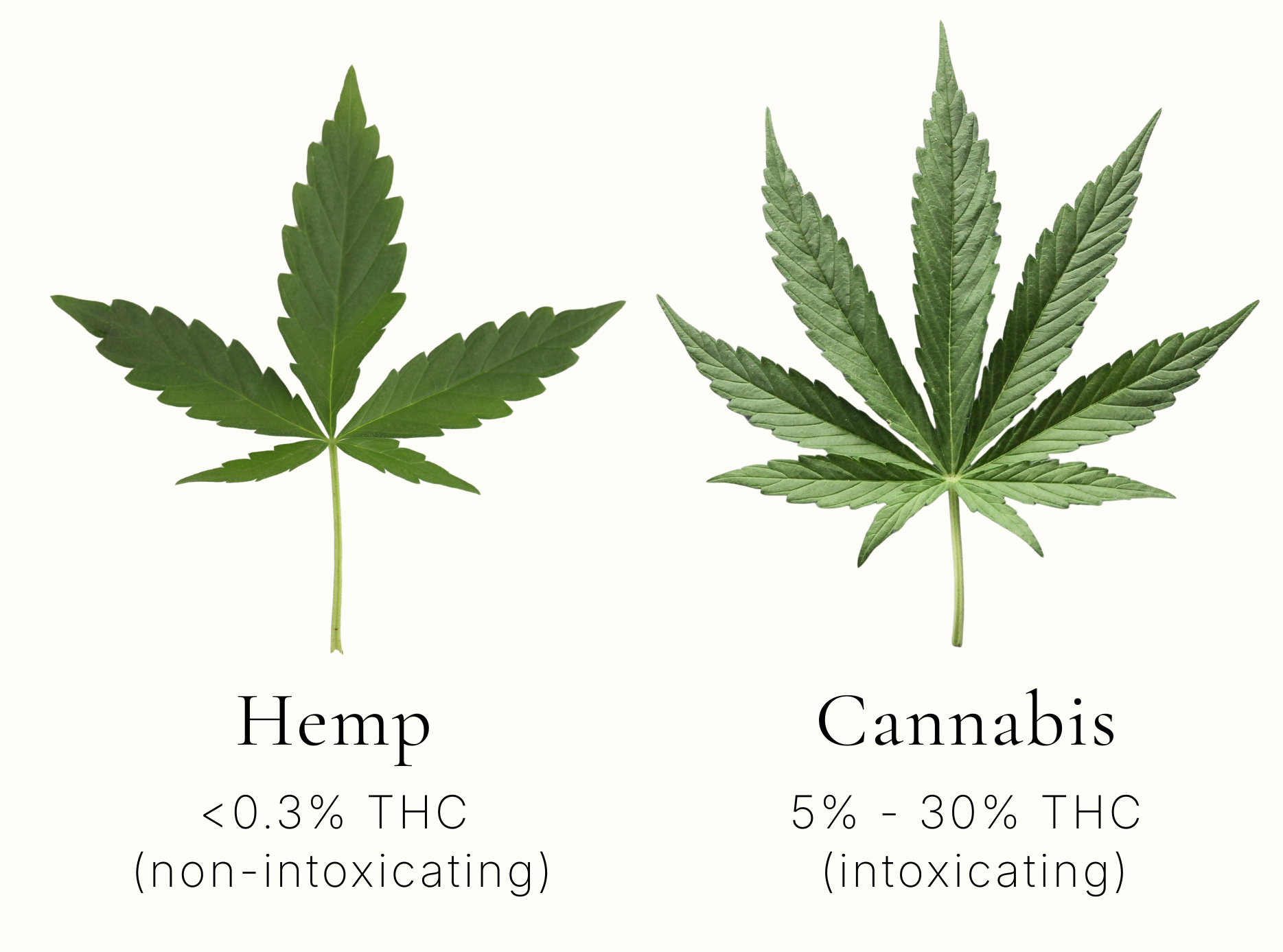
The restrictions over this plant are truly mind-blowing - a sustainable plant with excellent properties for the fabric industry stopped in its tracks because of a massive case of mistaken identity. Even though you’d have to smoke a hemp shirt the size of a house to feel anything, it got swept up in the 'War on Drugs' in the 1930s. Companies making plastic-based synthetic fibres like nylon also hopped on the bandwagon to get it banned as they saw hemp as a threat. We basically ignored one of the most sustainable fibres on Earth for decades just because it looked a bit like another plant that makes people want to eat too many crisps.
The irony is actually centuries deep. Back in 1533, King Henry VIII actually passed a law fining English farmers if they didn’t grow hemp. The British Navy was literally held together by it; a single ship needed miles of hemp rope and thousands of yards of canvas just to stay afloat. We went from it being legally mandatory to legally slandered in just a few generations.
Even during WWII, when the West realised they needed hemp for their ships, American and UK governments suddenly begged farmers to grow it again. But as soon as the war was over? Banned again. As a scientist, seeing a material be 'essential' one year and 'illegal' the next, despite the biology of the plant never changing, is just wild.
While the West was busy changing laws when it suited them and moving towards plastic-heavy materials, over in the East, hemp kept its status. It was recognised as a superior material - strong, reliable, and deeply woven into the fabric of daily life.
The Vietnam Connection
Being here in Vietnam, I’ve seen firsthand that this tradition never really stopped. Up in the northern mountains, in provinces like Hà Giang and Lào Cai, the Hmong people have been growing and weaving hemp for thousands of years. Some say the tradition is over 5,000 years old!
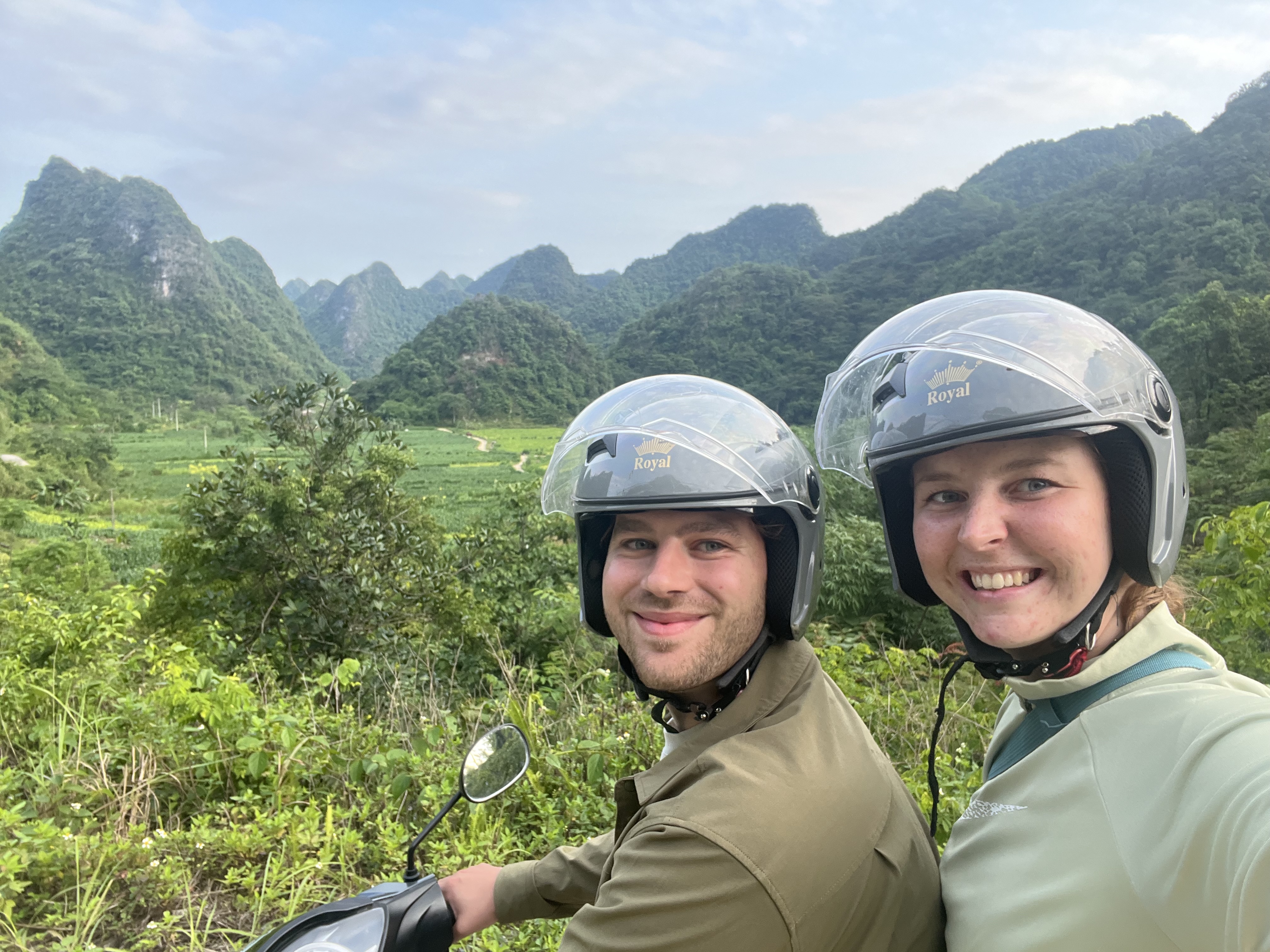
^ Toby and I exploring Northern Vietnam by motorbike.
Hemp is a bit of a survivalist. It grows on steep, rocky mountain slopes where almost any other crop would just give up. The Hmong women harvest the plants, strip the bark into tiny, thin ribbons, and then join them by hand-twisting. They then weave it on wooden looms into cloth that literally lasts for generations. It’s the ultimate slow-fashion.
The Hmong people don’t just use hemp for clothes; it’s also a vital part of their ceremonial life. It’s believed that hemp thread help guide the spirits of ancestors back home.
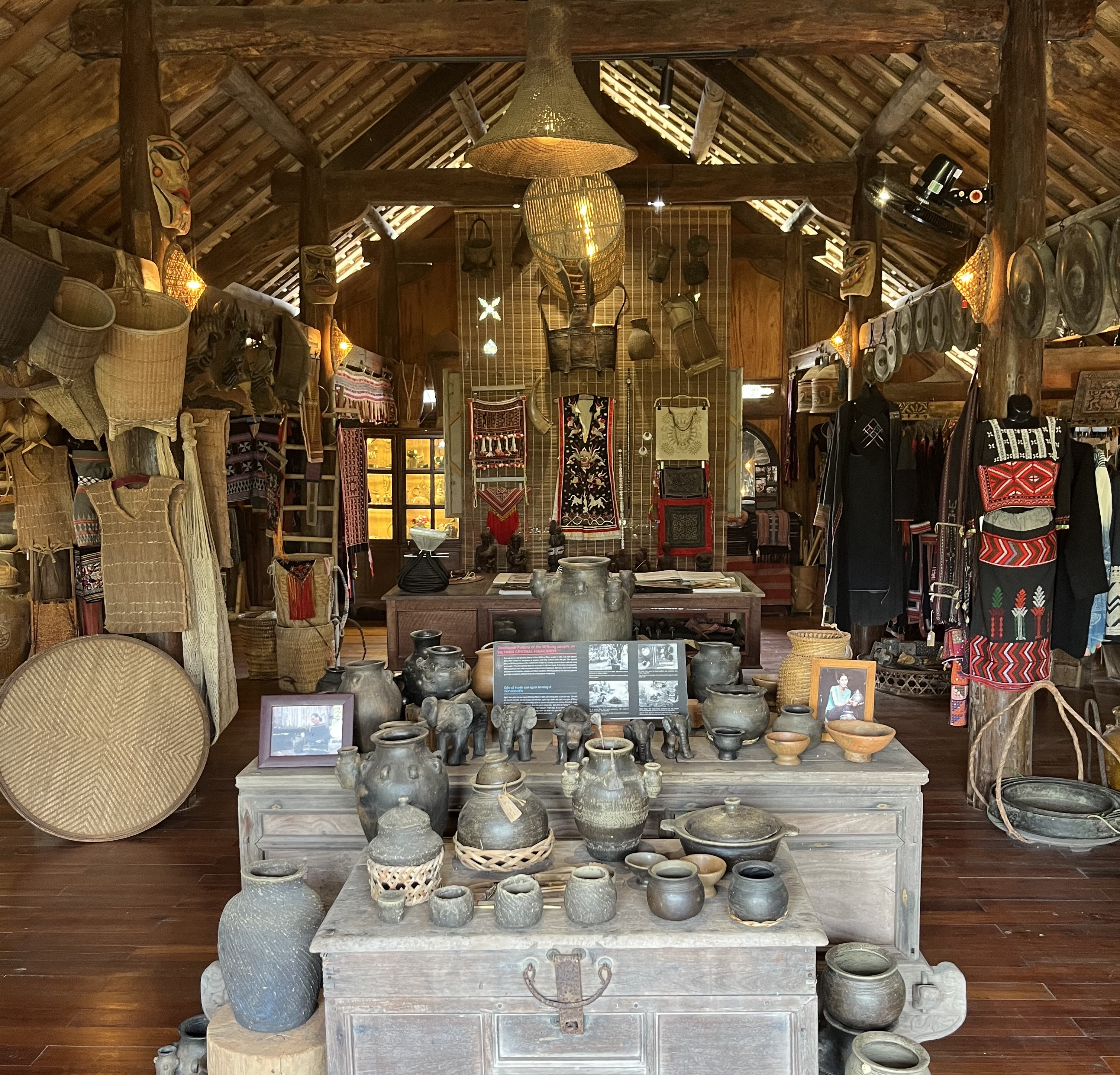
^ One of many shops showcasing the traditional products from ethnic minority groups in central and northern vietnam. Including indigo-dyed hemp fabric woven into clothes (right).
A Bit of a Reality Check...
I’ll be honest: because the idea for seashell.boutique was born right here in Vietnam, I had this romantic vision of sourcing all my cord directly from a mountain village or city market and stuffing it into my backpack. However, the reality of sourcing raw, consistent, jewellery-grade hemp on the ground is surprisingly difficult!
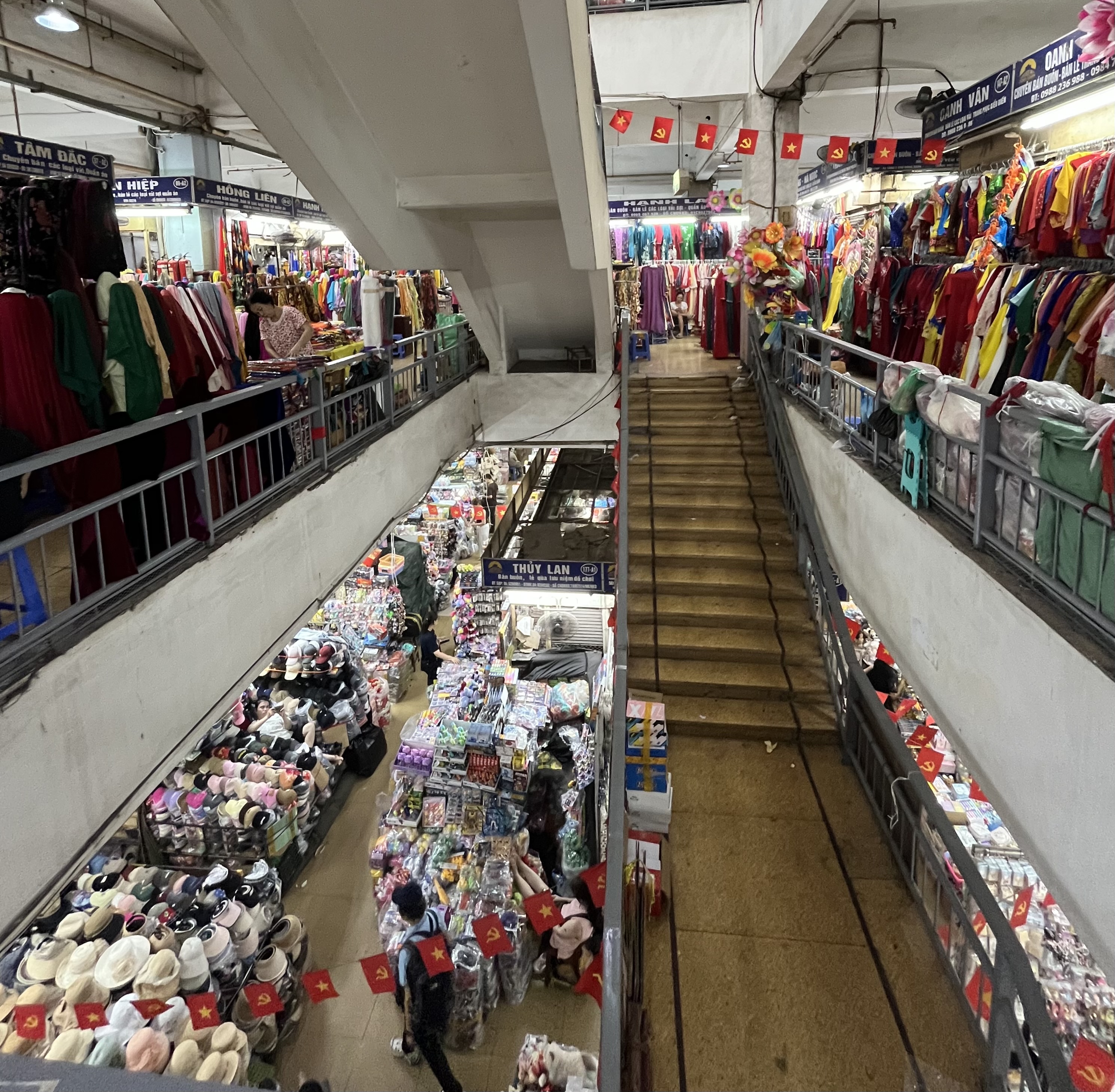
^ Đồng Xuân Market, Hanoi - Every single kind of fabric you could imagine... except hemp.
Between the language barrier and the logistics of finding exactly the right "polished" finish while travelling, it’s been a bit of a mission. So, the plan has evolved: I’ll be sourcing our high-quality hemp cord through specialist sustainable suppliers when I get back to the UK.
Even though the cord itself will be sourced outside of Vietnam, it still feels only right to launch with hemp. It’s a way of carrying a little piece of this ancient tradition, and the spirit of where this whole idea started, with every piece we make.
Why Hemp is "Ocean-Proof" (The Science Bit)
As a biomedical scientist, I can’t help but look at the technical specs of hemp. If we want jewellery that can go in the sea, hemp is the best natural choice:
- Antimicrobial & Anti-fungal: It’s naturally resistant to mildew and mould. Perfect for when your necklace gets a good soaking in the sea.
- UV Resistant: Unlike many materials that fade and become brittle in the sun, hemp holds its colour and stays strong.
- Zero Microplastics: Synthetic cords like nylon shed tiny plastic bits into the water. Hemp is fully biodegradable. If it ever did end up back in the sea, it would just break down naturally.
- Sustainable: It uses half the water of cotton, needs zero pesticides, and actually improves the soil it grows in.
The Finishing Touch: Stones and Beeswax
Raw hemp is great for sails, but for jewellery, it can be a bit scratchy and loves to soak up water. To make it boutique-ready, I’ve settled on a very specific two-step process.
Stone-Polishing
Our cord will be traditionally stone-polished. This is a brilliant method of rubbing the fibres with smooth stones to seal the outer surface. It makes the cord soft against your skin, prevents that annoying fraying, and gives it a refined, high-end finish.
Natural Beeswax Finish
Once the cord is polished, we then treat it with a layer of natural beeswax. This acts like a tiny wetsuit for every single fibre. The wax:
- Creates a water-resistant barrier: It stops the cord from soaking up moisture and getting heavy.
- Locks knots in place: It adds just enough grip so your necklace stays secure during a swim.
- Protects against the elements: It provides a natural shield against the salt and grime of the coast.
Hemp is a 100% natural substance, there’s no risk of microplastics or petrochemicals leaching into the water while you’re out enjoying the waves. It’s incredibly tough, it’s eco-friendly, and it’s built to last.
Hemp is strong enough for the adventure and soft enough for the everyday. I can’t wait for you to feel it for yourself!
To cleaner tides,
Liv x